iBuild
A Saudi marketplace for construction materials, designed end to end: the research, the buyer app, the vendor dashboard, and the brand.
iBuild is a B2B marketplace for construction materials and tools in Saudi Arabia, live at ibuild.sa. Laith Aljunaidy led its UX research and product design with Branders in 2024 and 2025: an Arabic buyer survey and research reports, the information architecture, the buyer app built around projects, the vendor dashboard with dynamic quotes and order-linked chat, and the iBuild brand identity.
- Client
- iBuild
- Role
- UX research and product design lead, with Branders
- Location
- Riyadh, Saudi Arabia
- Year
- 2024 to 2025
Updated
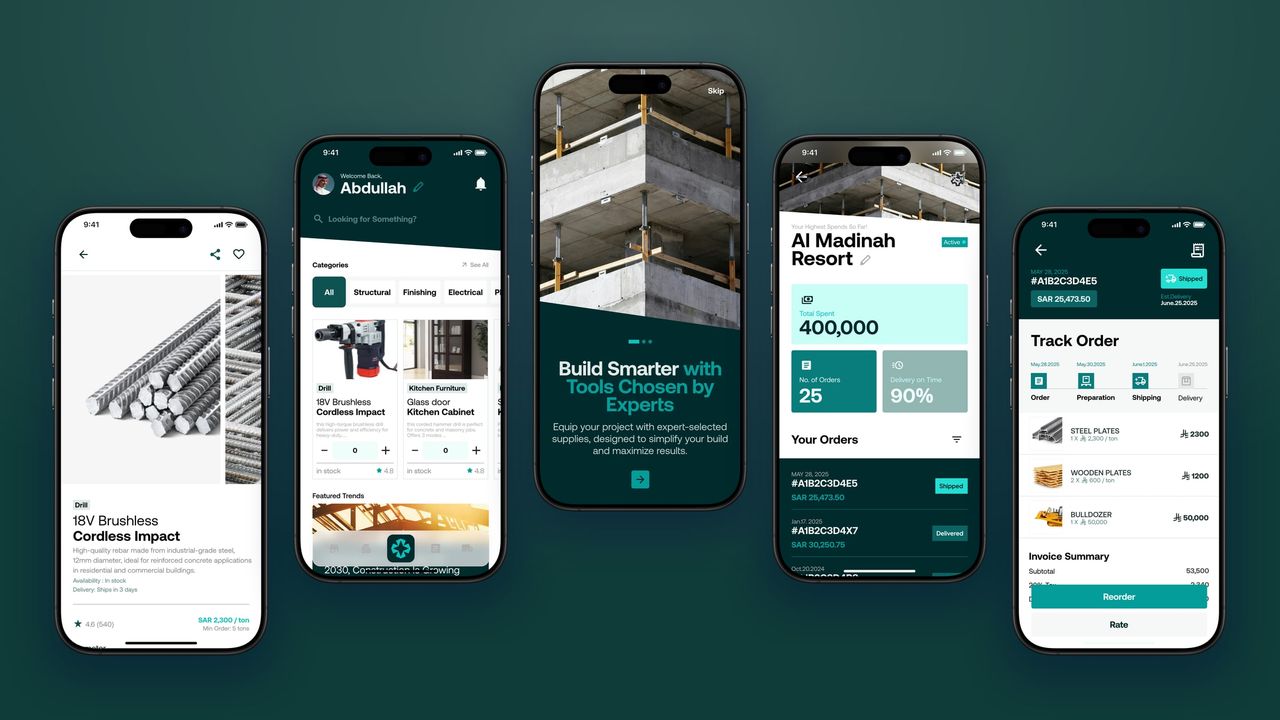
Context
Buying for a construction site usually means a chain of calls, quotes and trucks. Steel from one supplier, timber from another, a bulldozer from a third, and no single place that shows what a site has ordered.
iBuild puts that chain on one platform: buyers order materials and tools from verified vendors, vendors run their catalogue, quotes and orders from one dashboard. It is live at ibuild.sa.
The work covered everything a marketplace needs before it can be trusted with a site: the research, the buyer app, the vendor dashboard and the brand.
Research first
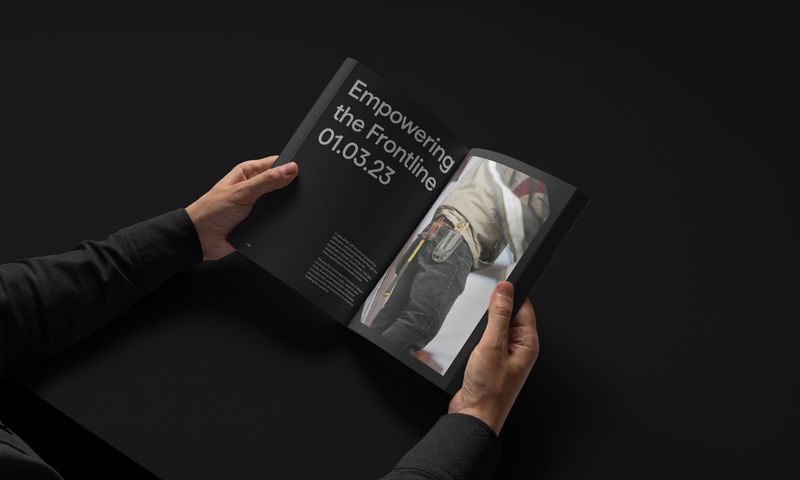
Before any screen, we asked the market. A survey in Arabic, written in Saudi dialect so it read like a conversation, went to buyers and suppliers in Riyadh, Jeddah and Dammam. The answers became a research report in English and Arabic, with personas, strategic recommendations and the measures success would be judged by, and then the information architecture document the whole build followed.
Two structural decisions came out of it. Orders live inside projects, not in one global list. And support lives inside each order, so every question has its context attached.
The buyer app
So the app is built around projects. Each site is a project with its own budget, its own orders and its own progress. A buyer opens Al Madinah Resort and sees what it has spent, what is on its way and what was delivered, without searching through a single long list.
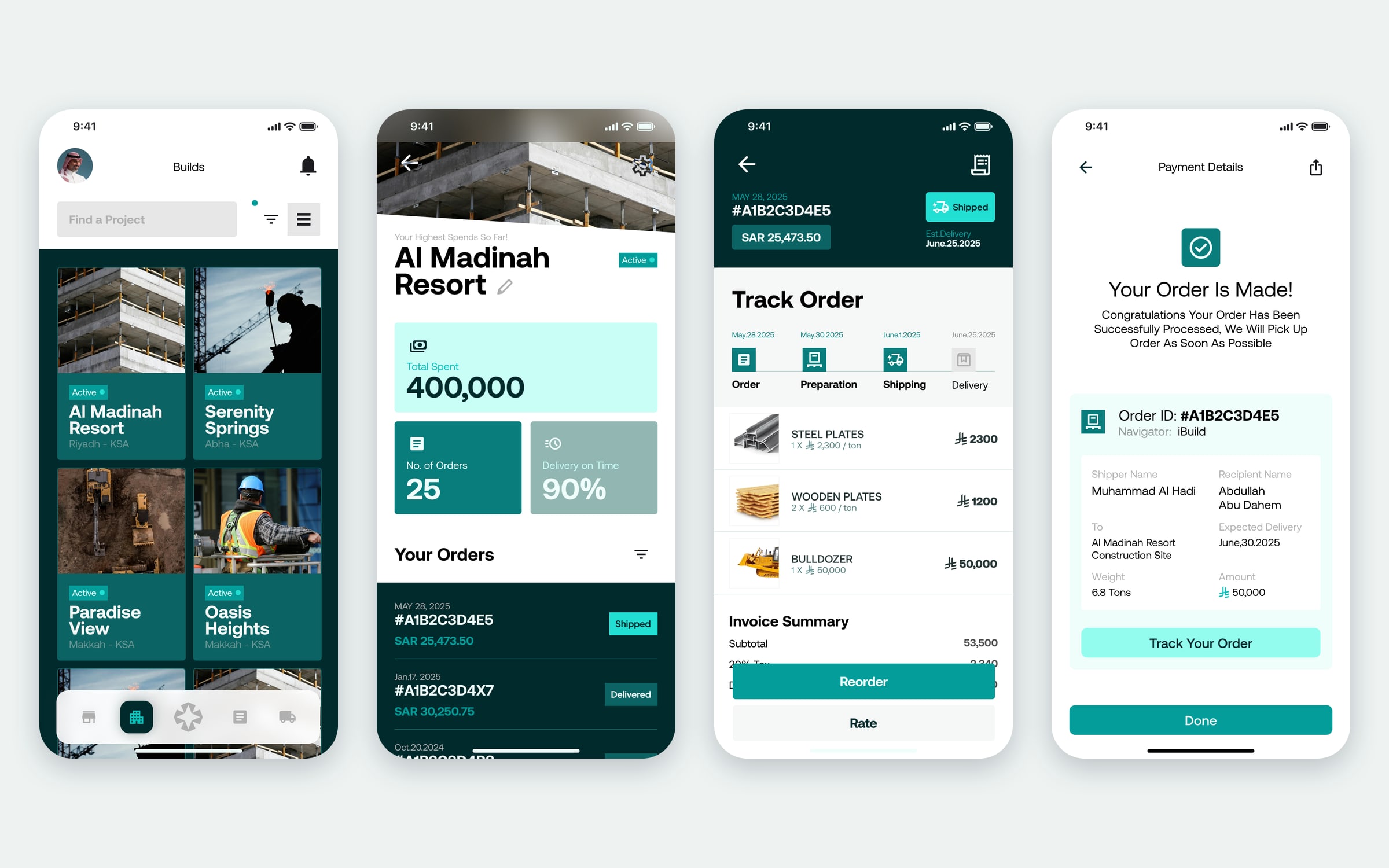
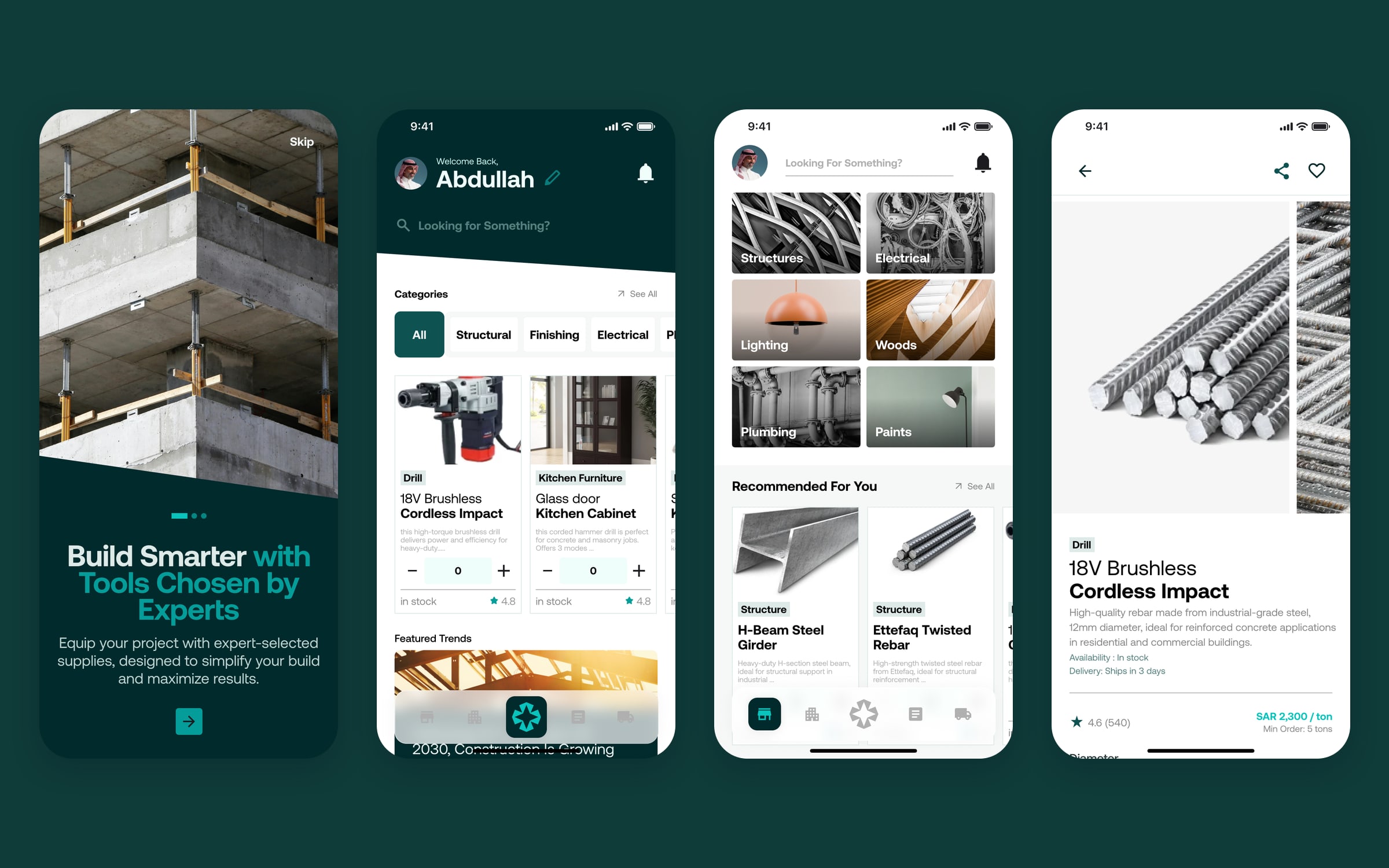
The brief asked for a marketplace that feels alive, closer to a food delivery app than a supplier catalogue. Home opens on categories, recommendations and trends. Every product carries its vendor, its price and its stock. Every order can be tracked step by step, from preparation to delivery, and reordered in one tap.
The vendor dashboard
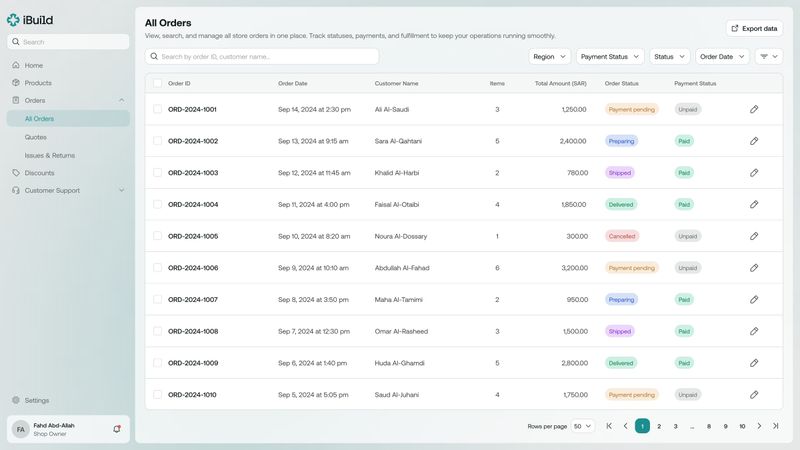
The other side of the marketplace is the vendor. The dashboard opens on performance: sales, orders, top products and where in the Kingdom the orders come from.
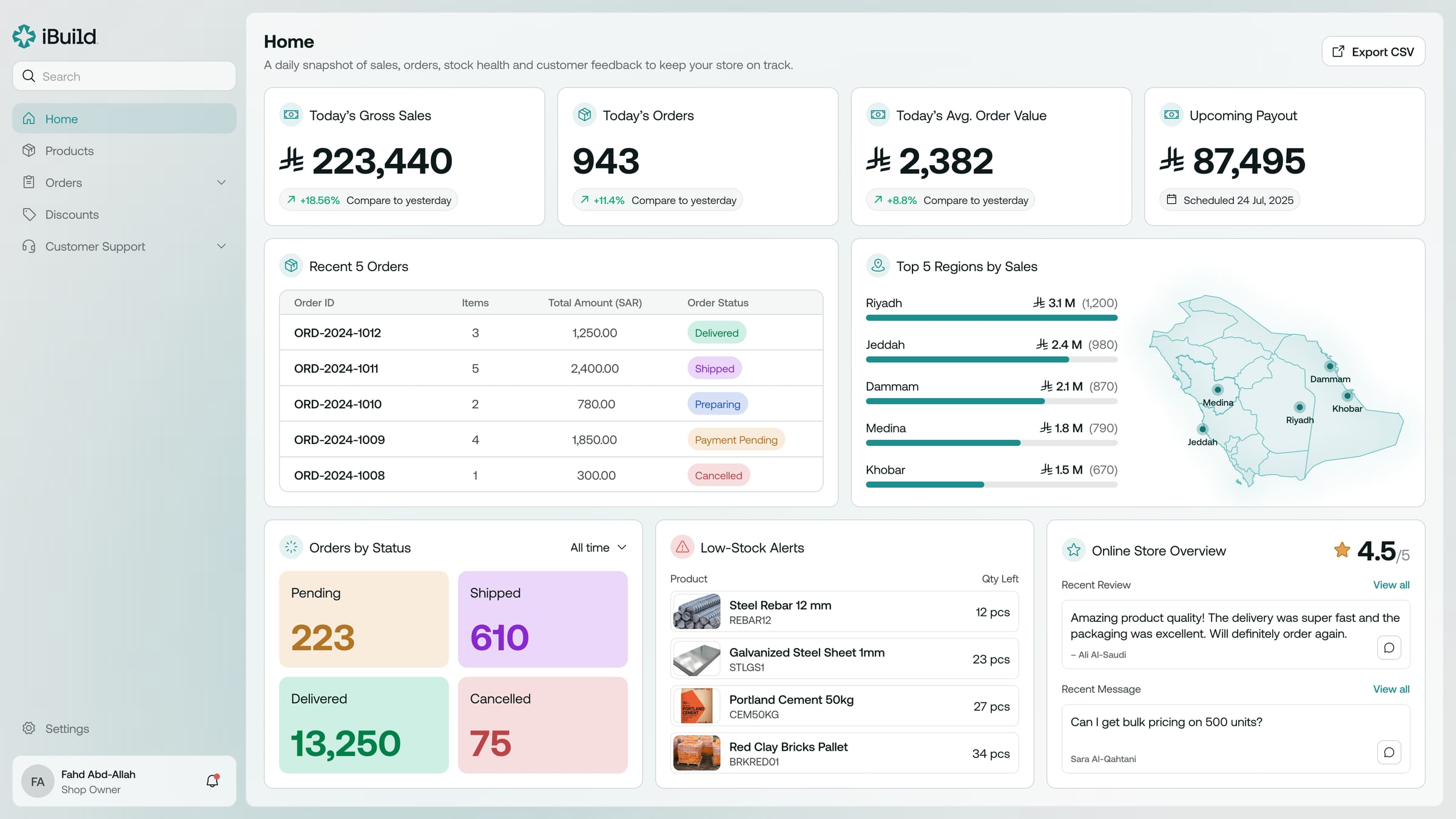
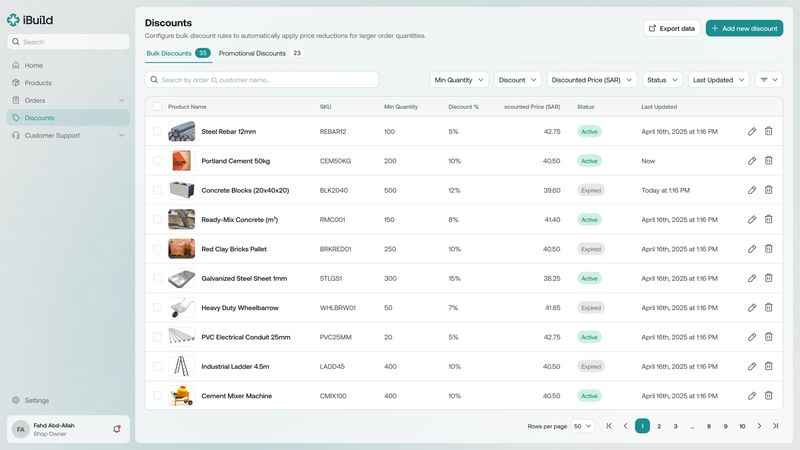
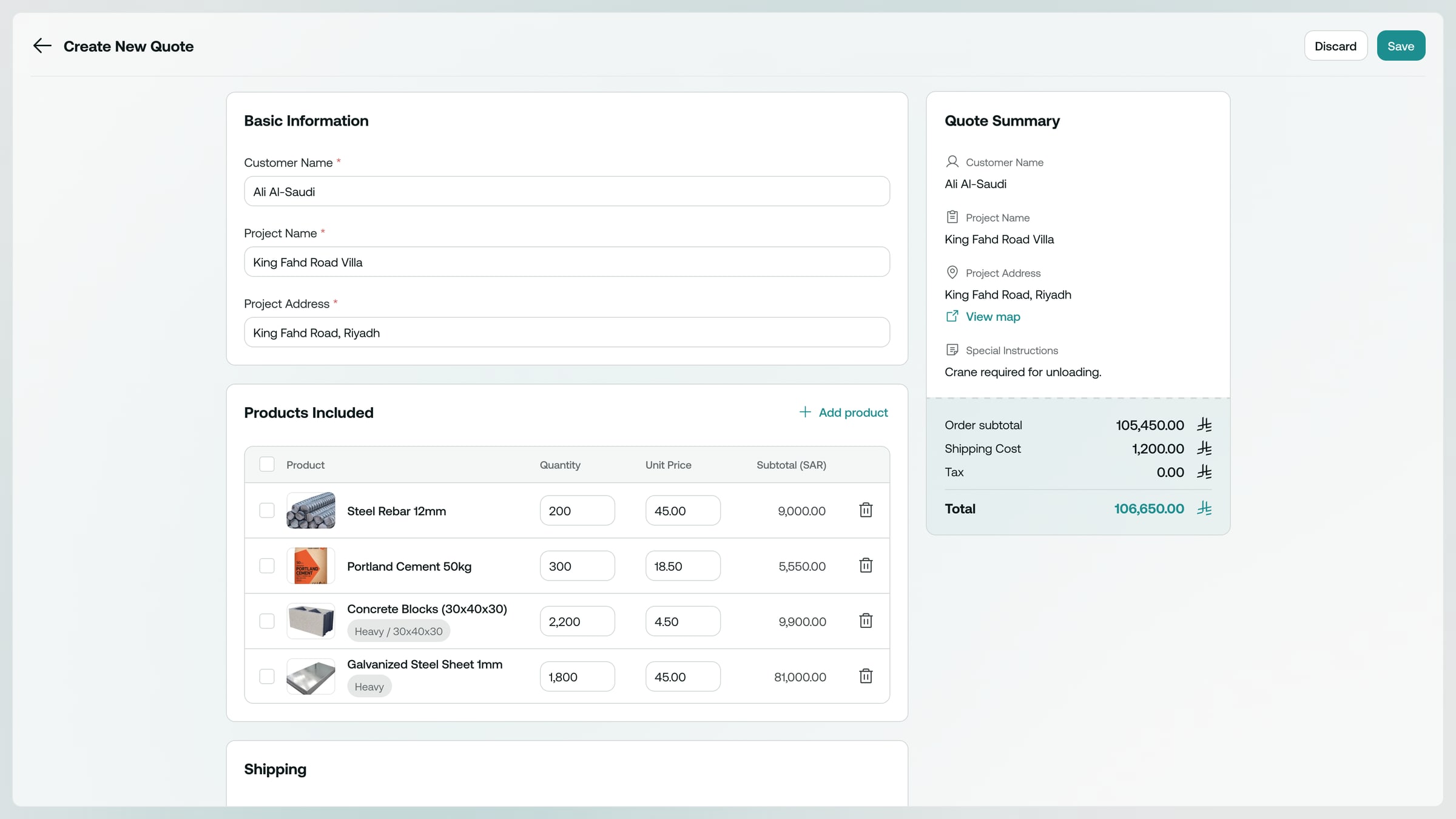
The heart of it is the quote. Construction rarely buys at list price, so vendors build dynamic quotes for a buyer’s project, line by line, and send them for approval. Bulk discounts sit beside them for volume.
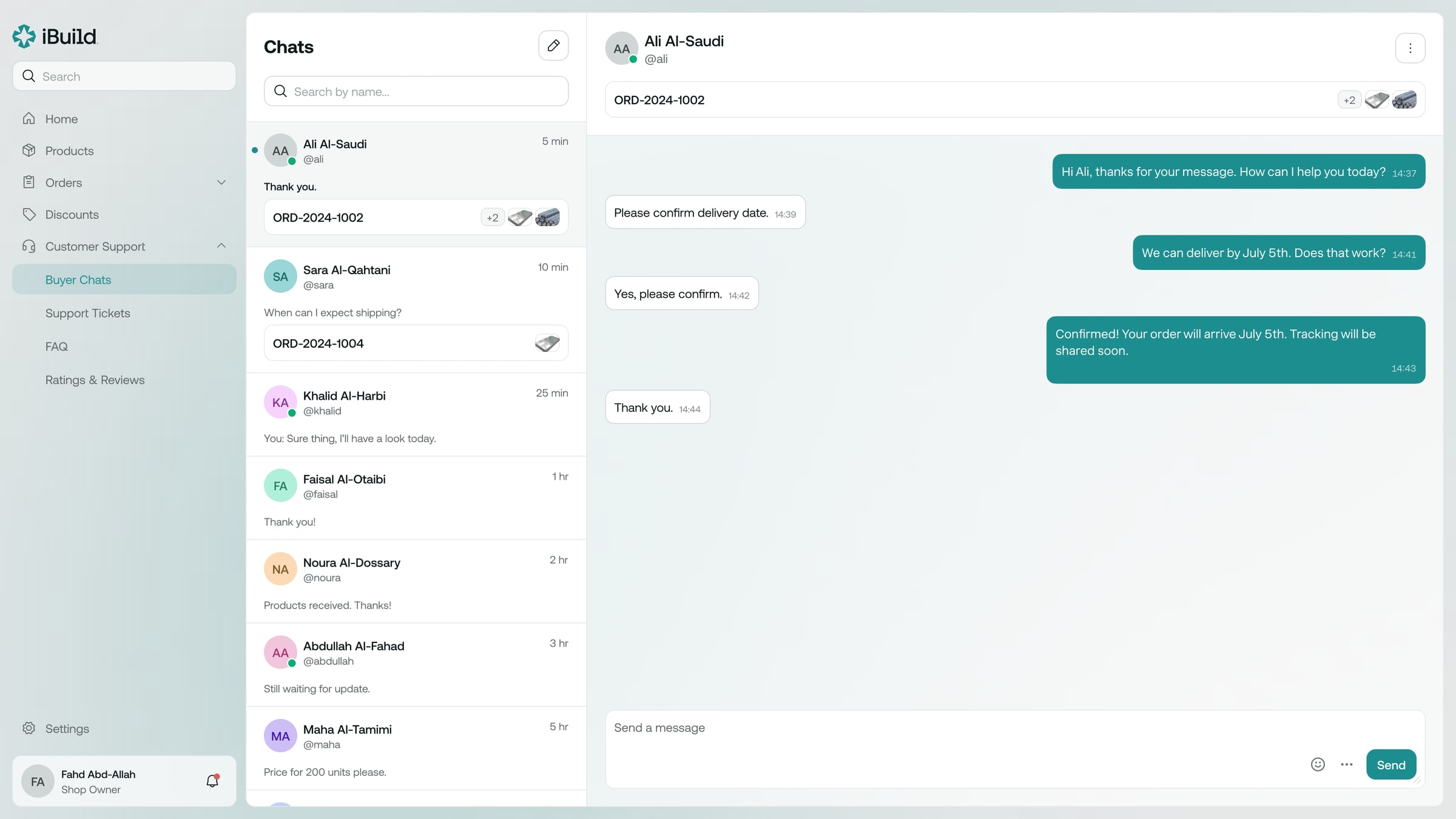
And every conversation is tied to an order. A buyer asking about a delivery talks to the vendor inside that order’s thread, so nobody has to explain which truck, which site, which invoice.
The brand
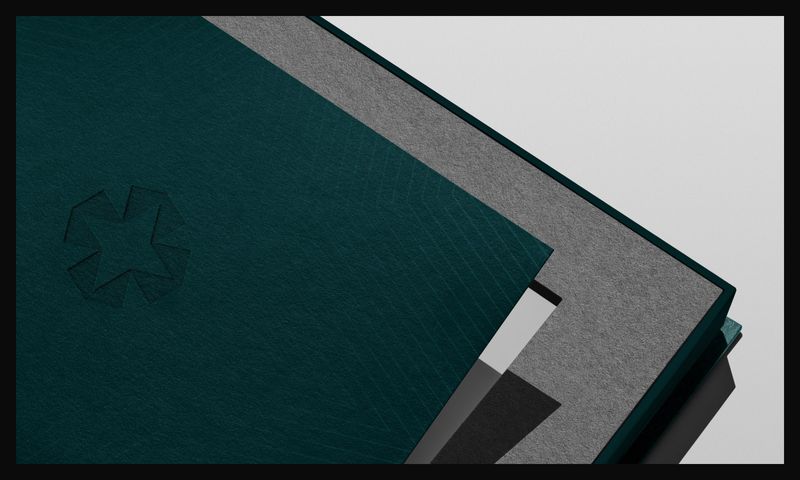
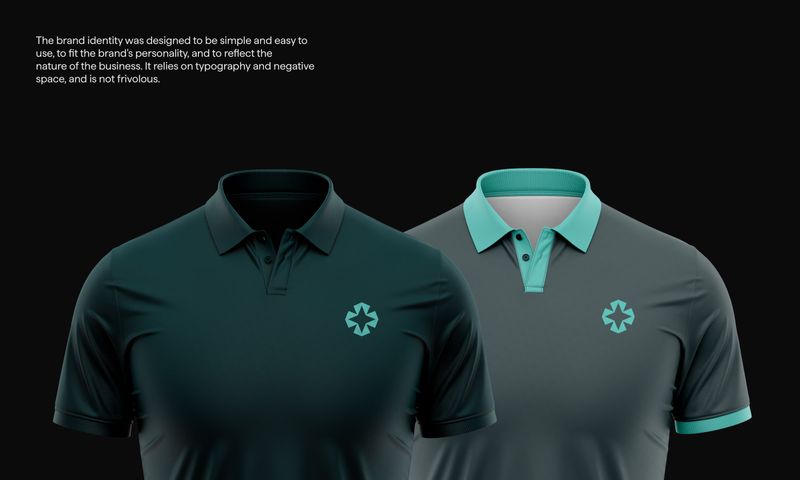
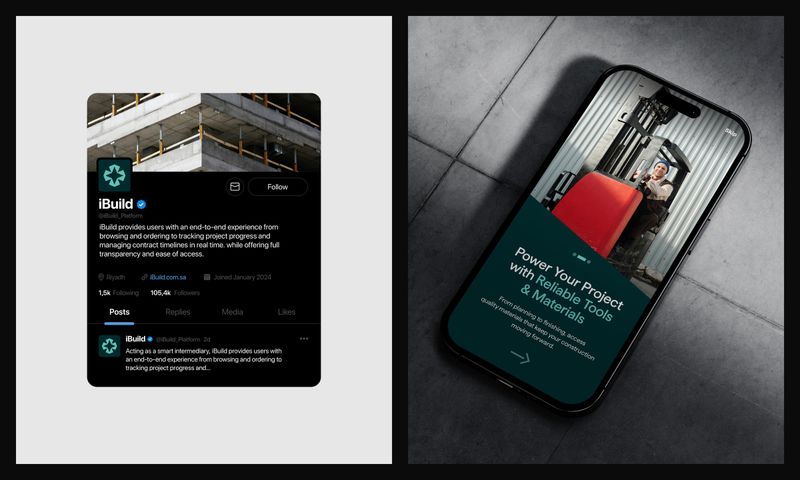
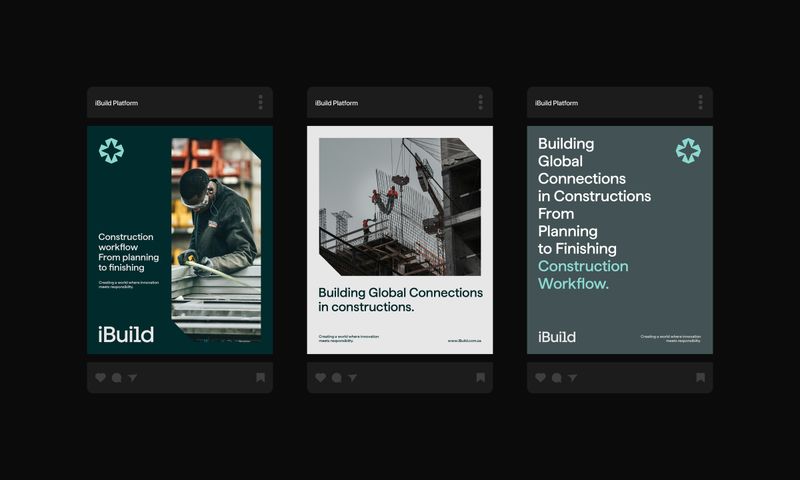
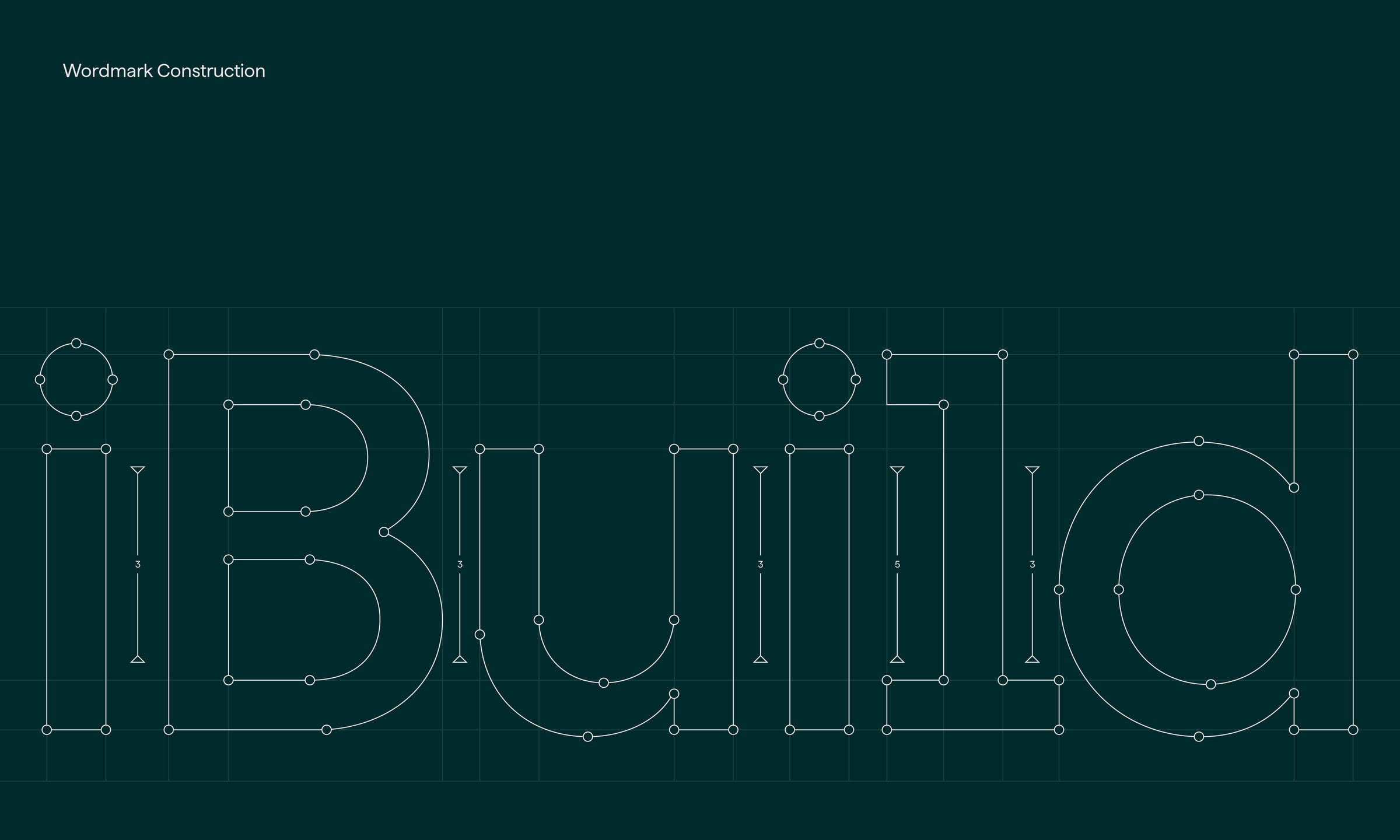
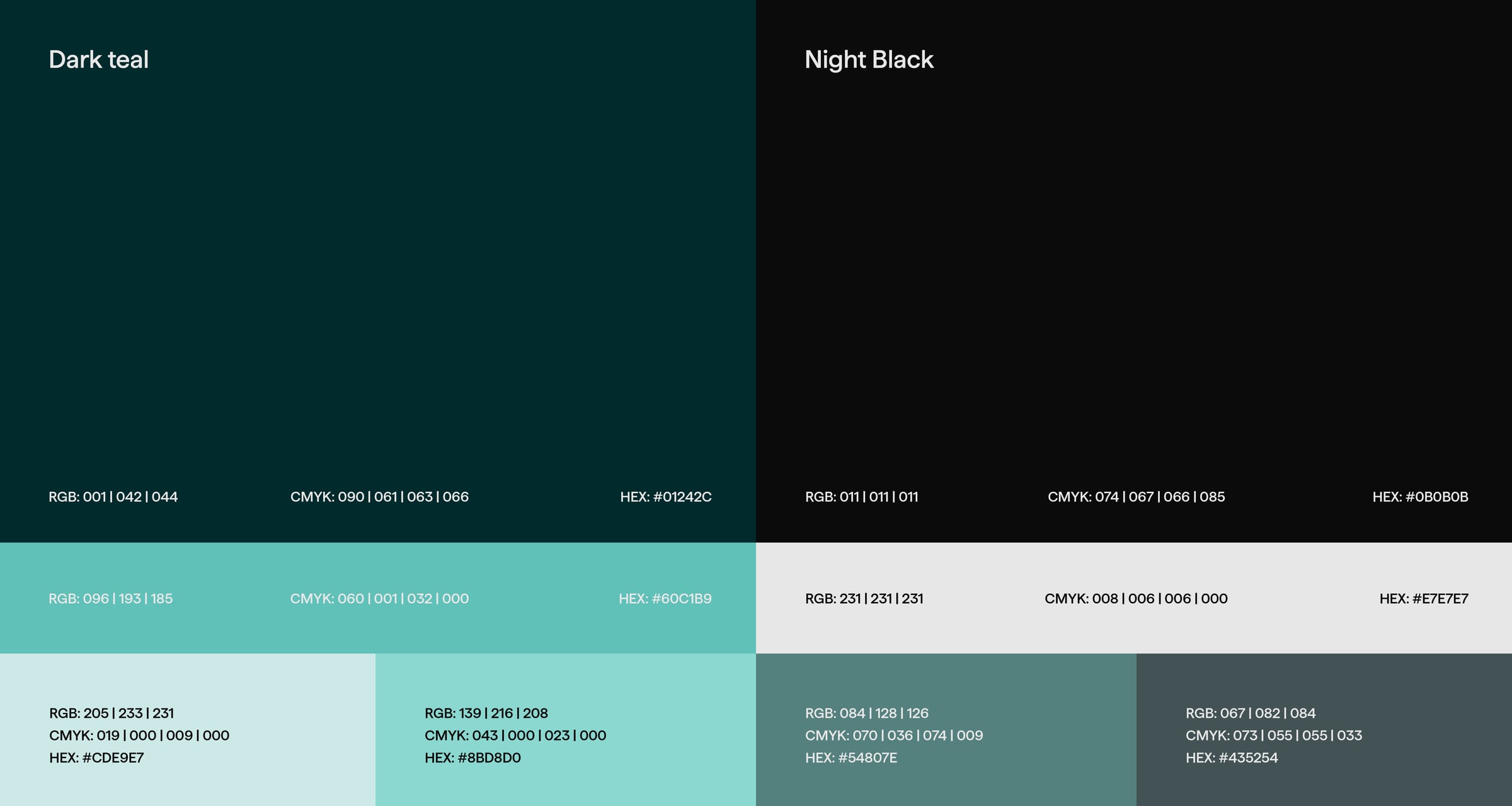
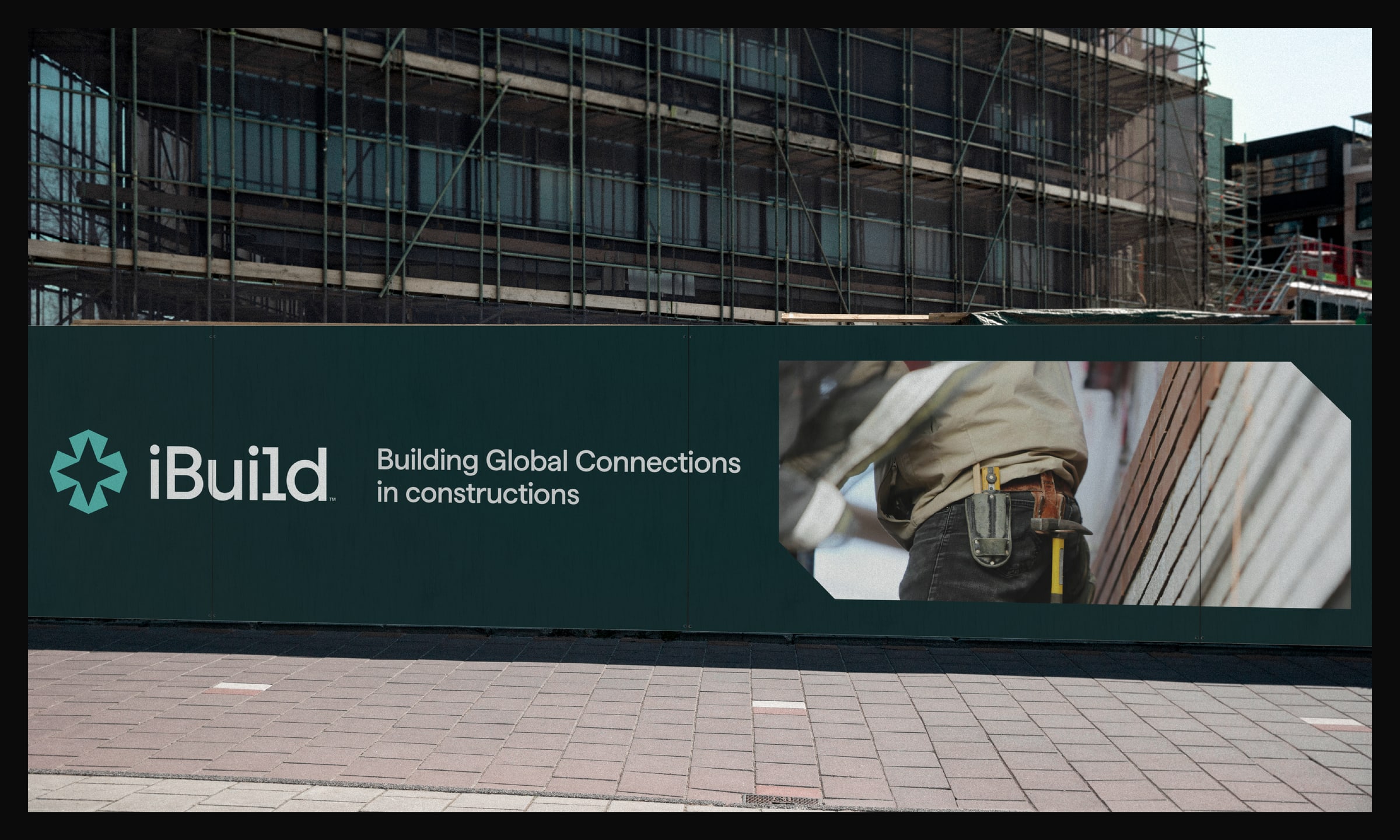
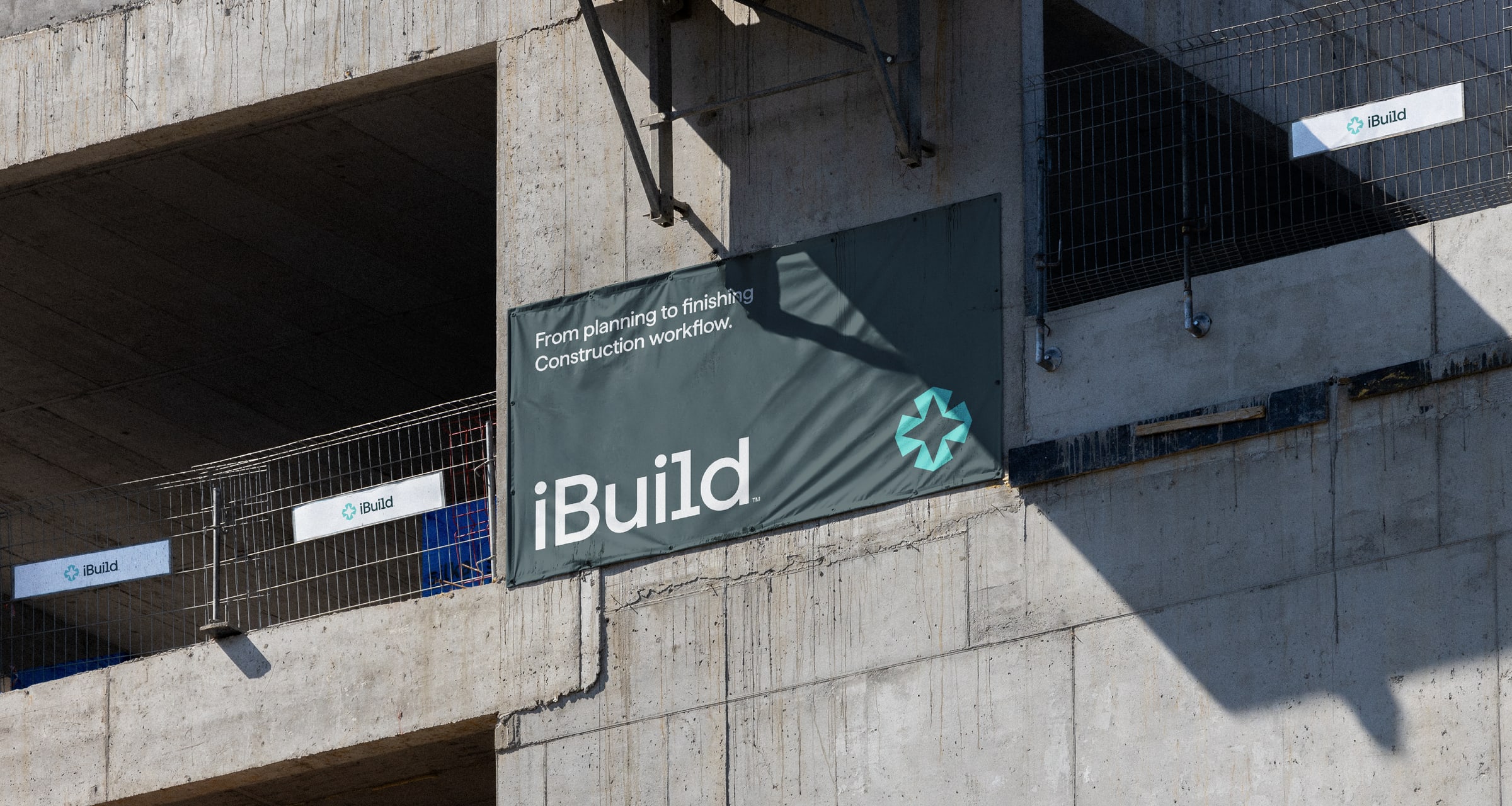
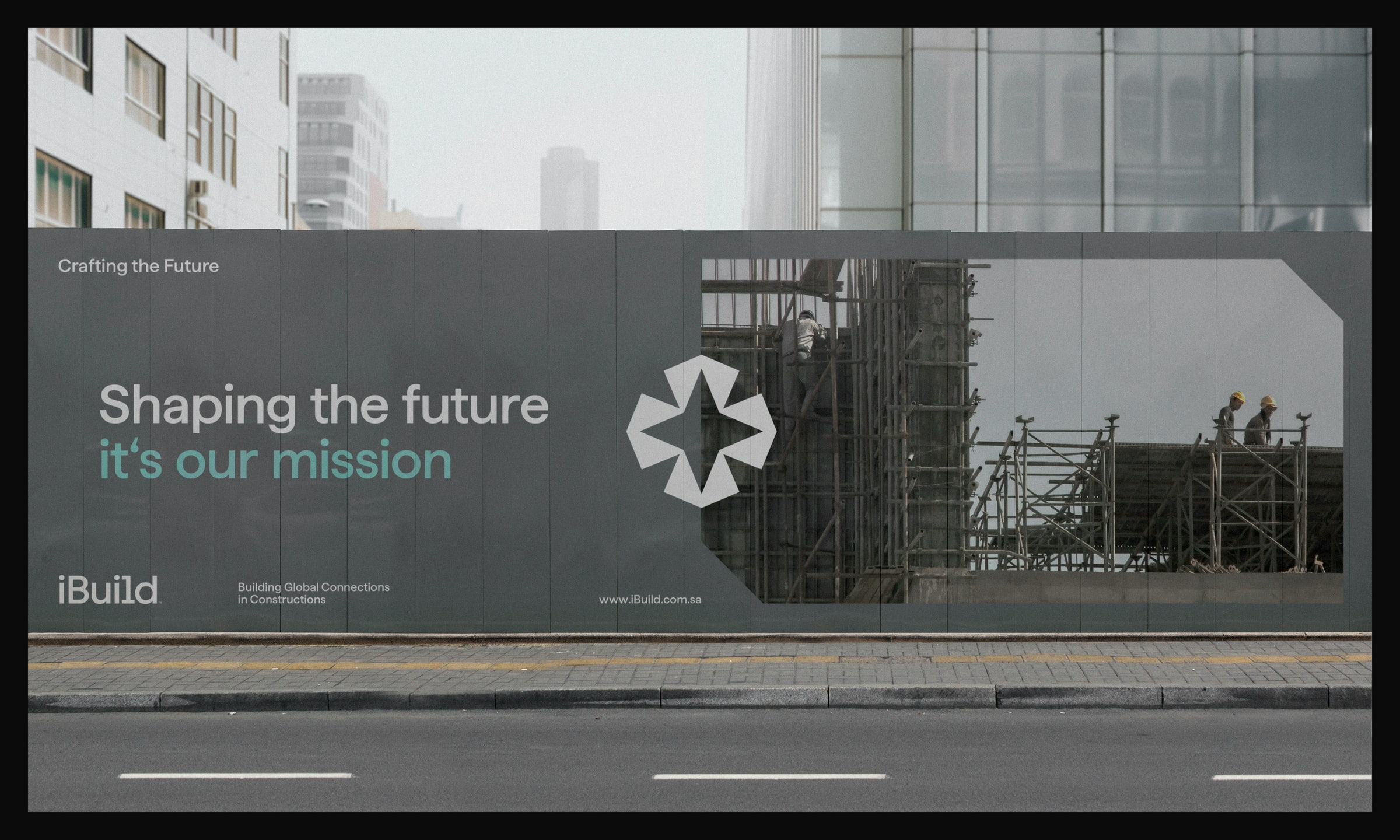
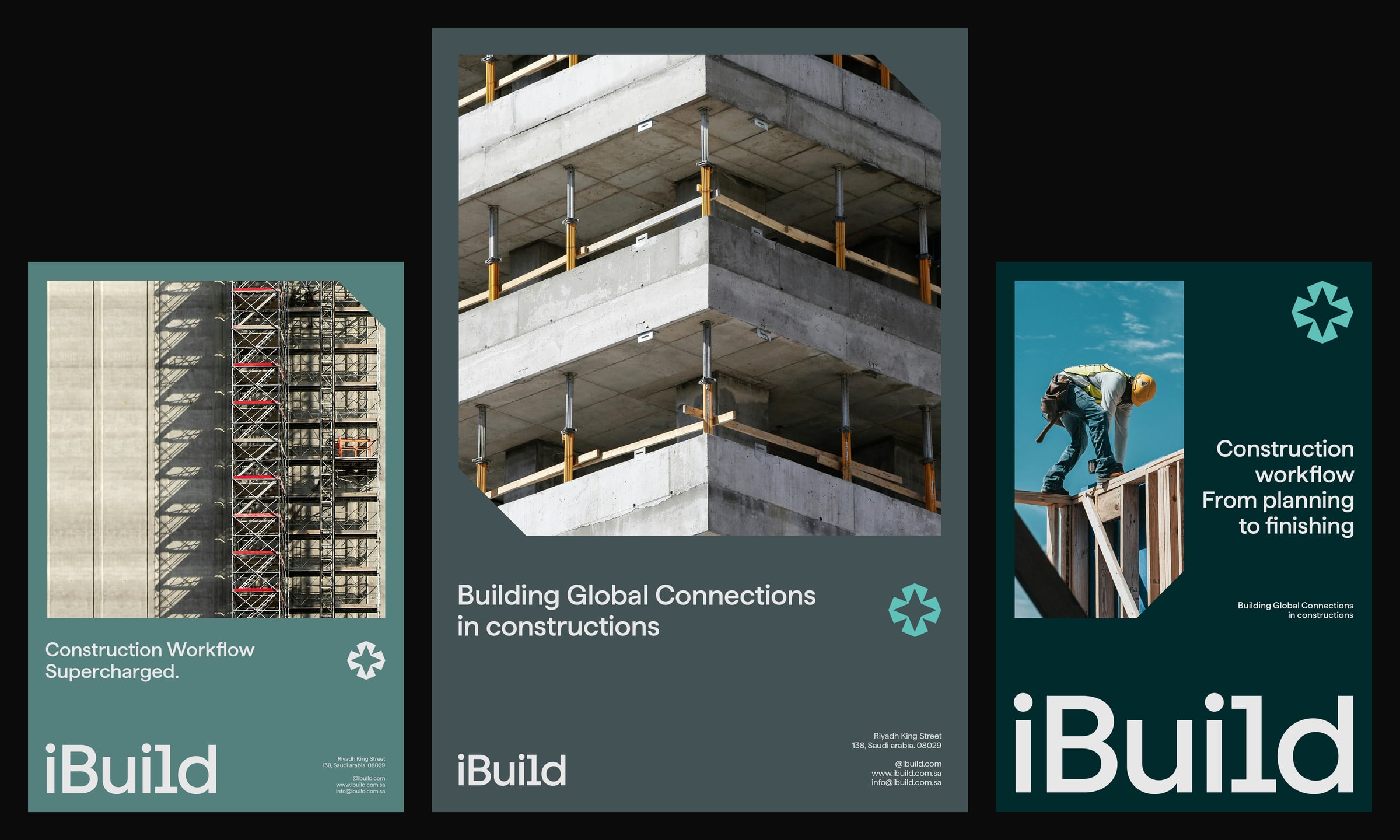
The identity was built for the same people: site managers, engineers, vendors. A mark of four parts locked around one centre, under the line Building Global Connections. Dark teal and night black, with a light teal for action.


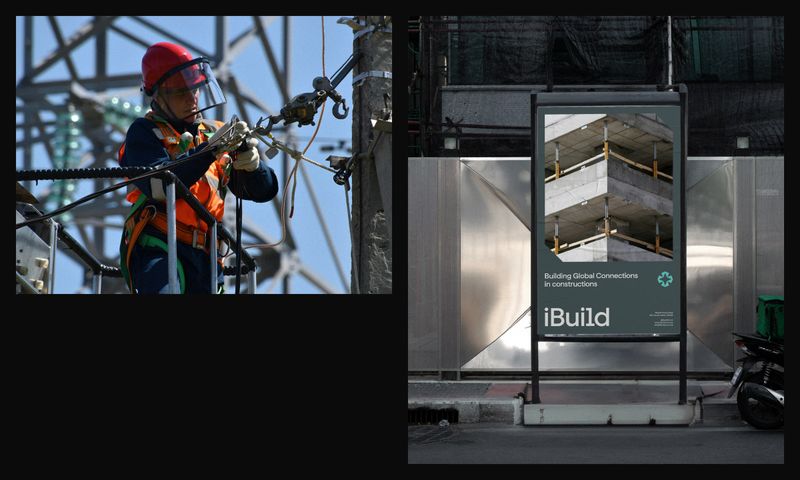
Then the brand goes where construction happens: on hoardings around a site, on banners on a half-built tower, on billboards, on uniforms and print.
My role
I led the UX research and the product design with the Branders team: the survey and the research reports, the information architecture, the buyer app and its flows, and the vendor dashboard, which a Branders designer built under my lead. The identity was a Branders project developed alongside the product.
Outcome
One marketplace with two sides that speak the same language: a buyer app organised the way a site is organised, a vendor dashboard organised around the quote, and a brand that looks at home on a hoarding.
FAQ
What is iBuild?
iBuild is a B2B marketplace for construction materials and tools in Saudi Arabia. Buyers order from verified vendors and track every order by project, and vendors manage their catalogue, quotes, discounts and orders from one dashboard. It is live at ibuild.sa.
Who designed iBuild?
Laith Aljunaidy led the UX research and product design with Branders in 2024 and 2025: the buyer survey and research reports, the information architecture, the buyer app and the vendor dashboard, alongside the iBuild brand identity.
Why is the iBuild app organised by project?
A construction buyer manages sites, not single purchases. Each project in the app holds its own budget, orders and deliveries, so a buyer sees what a site has spent and what is on its way without searching one long order list.
Gallery