Designing Wfrah, a livestock app for breeders who trust their fathers' methods.
How ten breeder interviews, one persona named Awad, and five design principles shaped an Arabic-first herd management app for the Gulf.
On this page
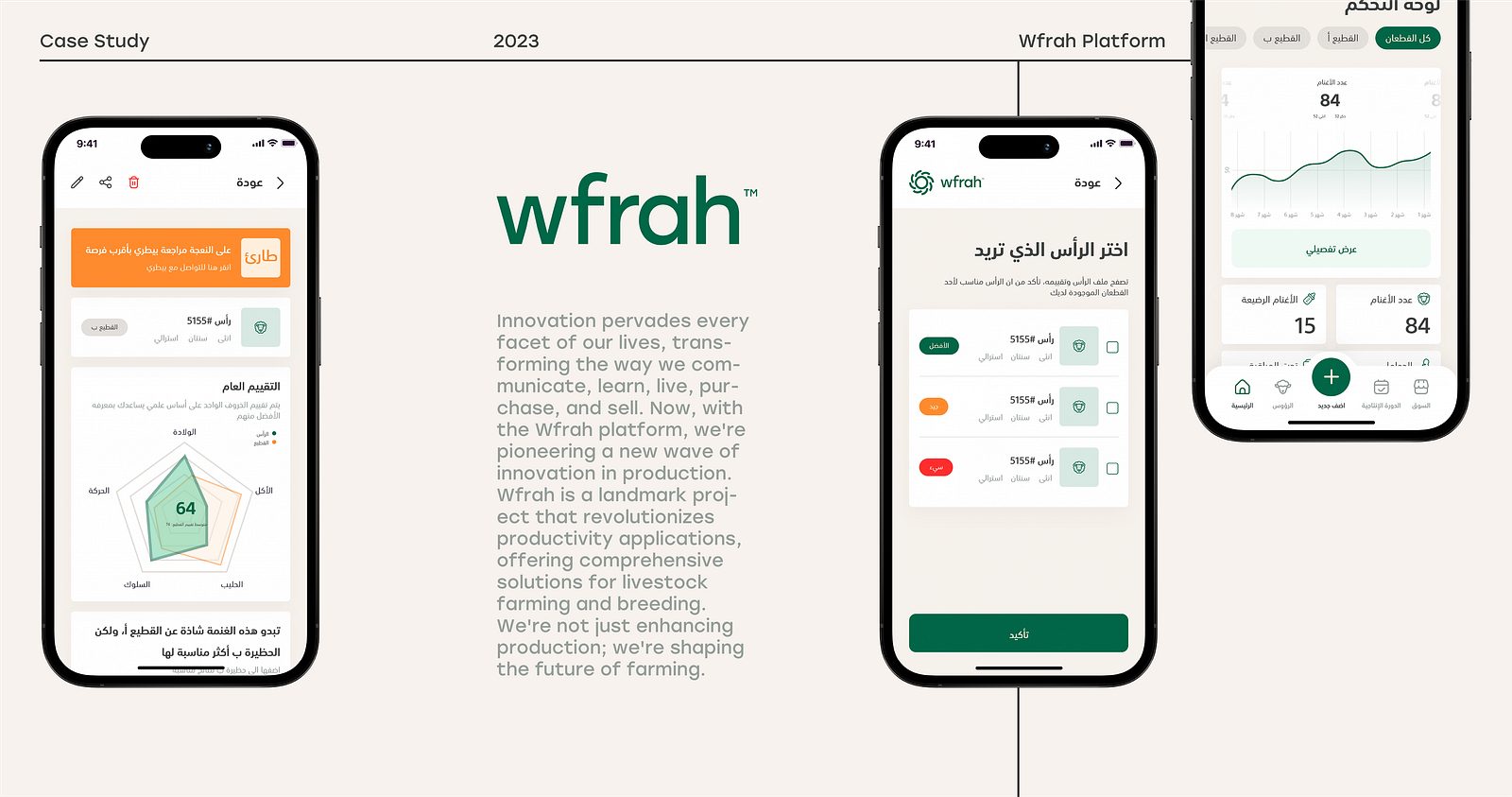
Wfrah is a mobile platform for sheep and goat breeders in the Gulf. It helps a breeder plan, monitor, feed, and care for a herd: records per animal, a daily nutrition calculator, vaccinations, a market, and a knowledge base. I ran the UX research and product design in 2023, and first wrote this case up on Medium that July.
The hard part was never the features. It was the person holding the phone: a breeder who learned the trade from his father, runs it the way his family always has, and has no reason to believe an app knows his animals better than he does. Everything in Wfrah was designed around earning that trust.
Key takeaways
- Wfrah is an Arabic-first herd management app for sheep and goat breeders in the Gulf, researched and designed in 2023.
- The main barrier was trust, not usability. Breeders rely on methods passed down through generations and doubt that technology can improve them.
- Ten in-depth breeder interviews plus observation of their daily tools shaped one persona, Awad, and one problem statement.
- Breeders blamed feed prices and low selling prices for their losses, and overlooked nutrition and management. The app answers with a nutrition calculator that does the maths for them.
- Five principles guided every screen: considerate, empowering, trustworthy, efficient, familiar.
Where did the idea come from?
From the founder, Abdullatif. He saw breeders losing money to problems they could not see, and wanted a platform that brought data into a trade run on memory and habit. He worked with Dalal, a lab chemist, on the science of feed and herd health before any screen existed.
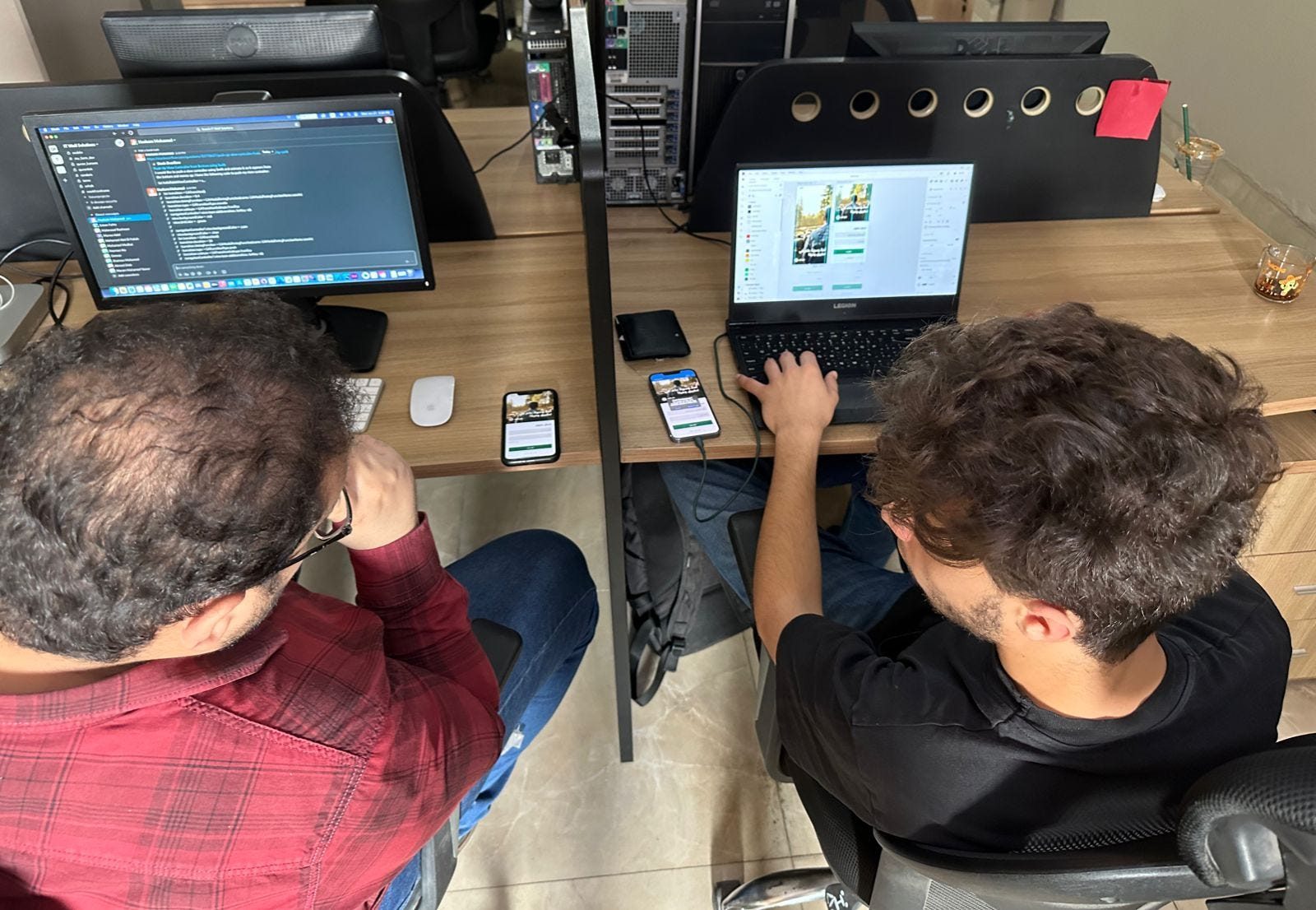
I joined to turn that vision into a product people would actually use. That meant meetings with livestock experts, professors, and vets, visits to farms in remote areas, and a trip to Egypt to work in the same room as the development team, led by Muhammad Nahhas, with Hisham building the mobile app.
What did the research find?
We started with the founder. In a stakeholder interview, Abdullatif named the real obstacle: breeders are reluctant to adopt new practices, rely on what their parents taught them, and mistrust technology’s ability to help. His advice for adoption was to show tangible benefits and early success stories.
Then we went to the breeders. Ten in-depth interviews across experience levels, plus observation of the tools and techniques they already used. The findings were consistent:
| Finding | What it meant for the design |
|---|---|
| Breeders blame high feed costs and low selling prices for their losses | Educational content that shows where losses actually come from |
| Many cannot work out their herd’s daily nutritional needs from the equations | A calculator that does the maths for each case and growth stage |
| Dividing flocks, recording data, and managing feed storage are hard | Simple records per herd and per animal |
| Soil, pens, ventilation, and heating are often overlooked | Environment guidance inside the app |
| Brokers stand between breeders and the final buyer | A market inside the platform |
| Trust in technology is low | Proof and success stories before the ask |
Meet Awad
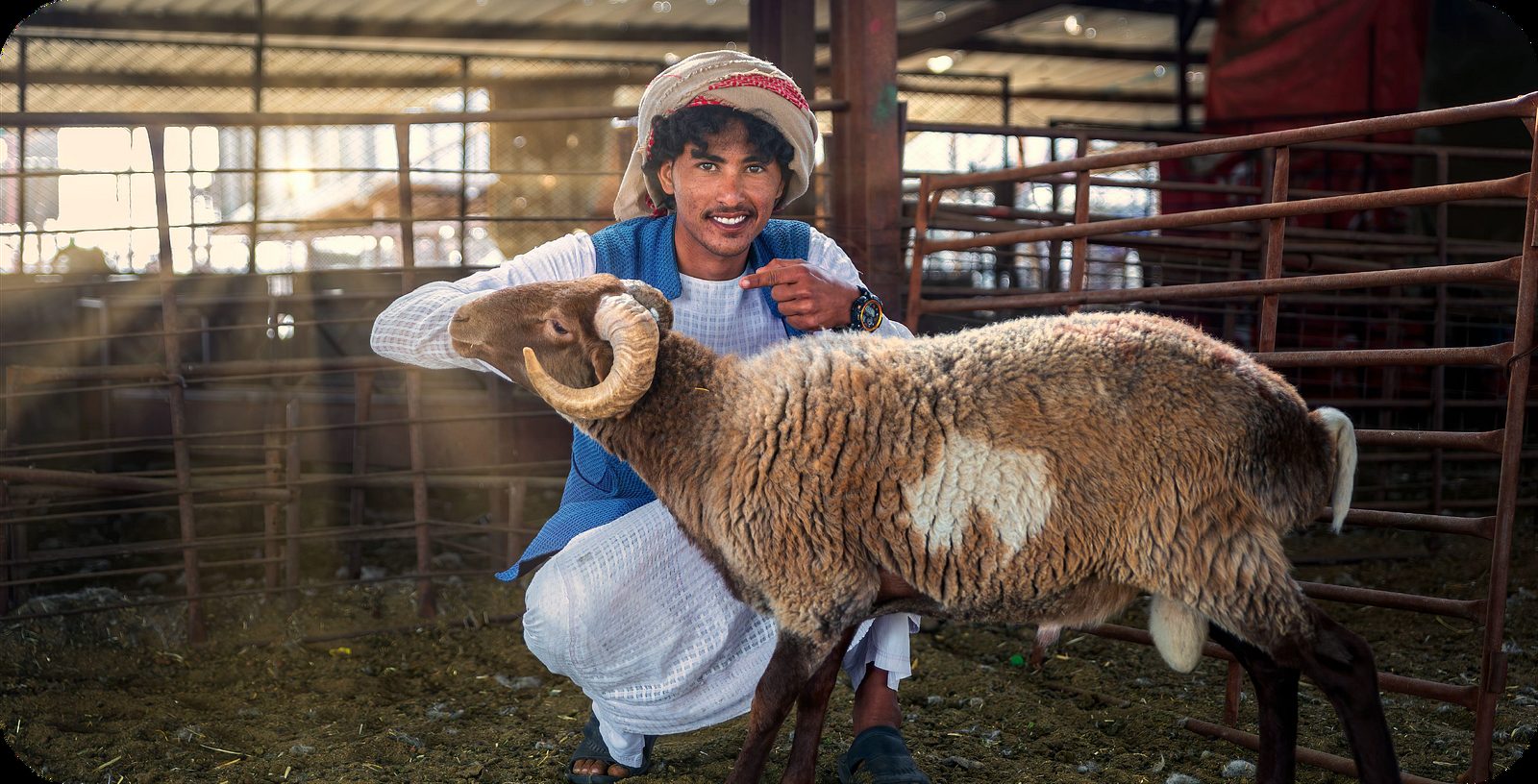
The research became one persona. Awad is a typical Arab breeder: proud of doing things the way his family has for generations, frustrated with how hard the herd is to manage, and curious whether there is a better way. He says technology seems too complicated. He also says he is open to trying new things if they help.
That tension, pride and curiosity at once, is the whole design brief. An app that lectures Awad loses him. An app that shows him something useful on the first screen might keep him.
The problem statement
Traditional breeders like Awad hesitate to adopt new tools and practices, even when the gains in productivity and profit are real. At the same time they struggle with nutrition, environment, and admin, which hurts the farm.
So the goal was a user experience that educates and builds trust in modern tools while meeting the specific needs of traditional breeders.
Five principles for every screen
- Considerate. Respect the realities of the work, across platforms, languages, and countries.
- Empowering. Make any breeder feel capable, whatever their experience, with advanced tools there when needed.
- Trustworthy. Fix small inconsistencies that erode trust, be honest about what features can do, and make mistakes easy to undo.
- Efficient. Remove steps, simplify the complex tasks, and add friction only before decisions that matter.
- Familiar. Use patterns people already know, so the hundredth visit feels as easy as the first.
What went into the app
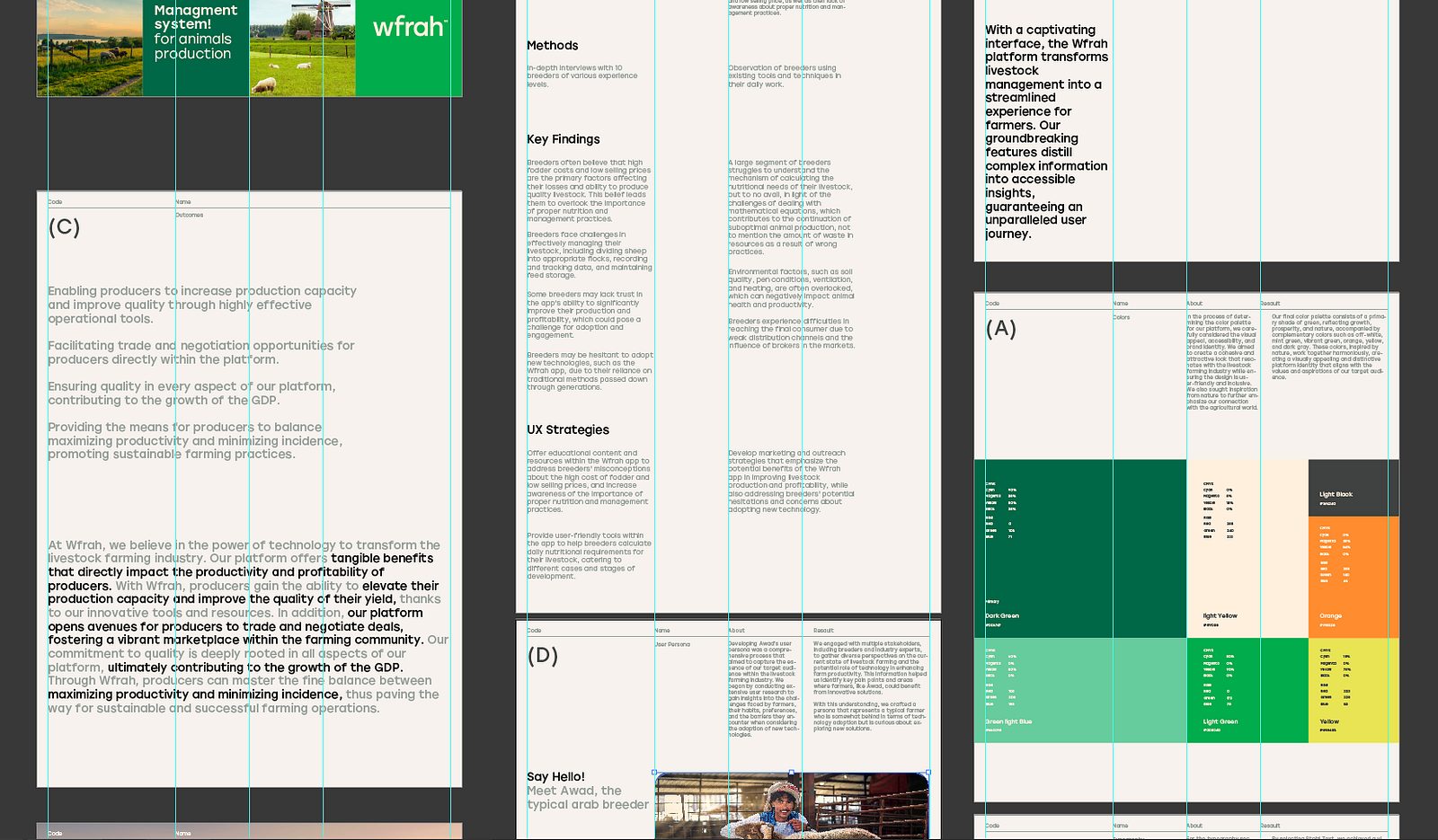
The information architecture covered herds, the nutrition calculator, environment guidelines, the market, a knowledge base, and the account. Navigation used progressive disclosure, so a new breeder sees the essentials and an experienced one can go deeper. Icons were unified, and colour and type were tuned for bright sun and low light, because breeders open it in the pen.
The user journey followed Awad from discovery through doubt to a trial and a decision. At the point where he would hesitate, the app shows value and stories from other breeders before it asks for anything.
What I learned
Designing for people who distrust technology is mostly about restraint. Every feature Wfrah offers competes with a method that has worked for a family for generations, so each one has to prove itself quickly, in the breeder’s language, on a phone, outside.
I wrote the Medium version because I could find very few UX resources for agriculture products. If you are designing for farmers or any audience that does not trust software yet, I hope this helps. And if you are building one, tell me about it.
FAQ
What is Wfrah?
Wfrah is an Arabic-first mobile platform for sheep and goat breeders in the Gulf. It covers herd records, a daily nutrition calculator, vaccinations, environment guidance, a market, and a knowledge base.
What was the biggest UX challenge?
Trust. Breeders rely on methods passed down through generations and doubt that an app can improve their herd, so the design had to show value early and earn belief before asking for commitment.
How was the research done?
A stakeholder interview with the founder, ten in-depth interviews with breeders of different experience levels, and observation of the tools they already used. The findings produced one persona, Awad, and one problem statement.
Sources
- on Medium medium.com